Quiz Lead Generation Case Study: How Spendge Got 6,500+ Leads
Nazar Didokha – performance marketing specialist. I use quiz marketing with my clients all the time to make ad campaigns perform better, capture qualified leads and grow average order value. Find me on LinkedIn – https://www.linkedin.com/in/nazar-didokha/
Here’s a great example of quiz marketing done right, from the fintech company Spendge.
Spendge offers virtual cards for paying for ads. By putting a quiz in front of sign-up to filter out unqualified traffic, we generated more than 6,500 quality leads instead of cheap, random registrations. Here’s how it worked.
The AdsQuiz Case
Spendge issues virtual cards for ad payments. Before it started using quizzes, the company ran ads straight to its sign-up page — and got plenty of cheap but completely unqualified registrations that were hard to do anything with.
I decided to test a different approach: replace direct-to-sign-up ads with a quiz that screens out the wrong visitors and qualifies leads before they ever register. The channel ended up delivering 6,500+ leads and a list of 2,500+ chatbot subscribers.
Problem and Solution
Quiz lead generation instead of sending ads straight to sign-up. Spendge’s problem is a classic one for direct-response ads: lots of clicks, lots of registrations — and almost no idea who those people really are. Some sign-ups were accidental, others came from users the product simply wasn’t a fit for.
A lead generation quiz tackles this differently. Instead of pushing all traffic straight to the sign-up form, the quiz first “talks” to the visitor, figures out their situation and only then moves them forward — to registration or into a chatbot.
Quiz Structure
Why Spendge Went with 15 Questions
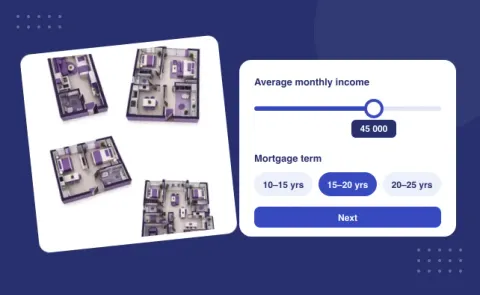
For most niches, the sweet spot for quiz length is 4–7 questions. For Spendge, though, the quiz was made longer on purpose — 15 questions — to weed out as many unqualified leads as possible while people were still taking it. Every question had a specific job instead of collecting answers just for the stats.
Three Types of Questions in Spendge’s Quiz Marketing Strategy
The questions were split into three groups, and each group powered its own part of the funnel.
Pain points
The target audience’s problems. These questions surface what the prospect is already struggling with — the reason they’re looking for a solution.
Current situation
The prospect’s context right now. These questions show where a potential customer stands at the moment they take the quiz.
Product benefits
What Spendge can do. These questions highlight the service’s features and benefits, leading the prospect to the logical next step — signing up.
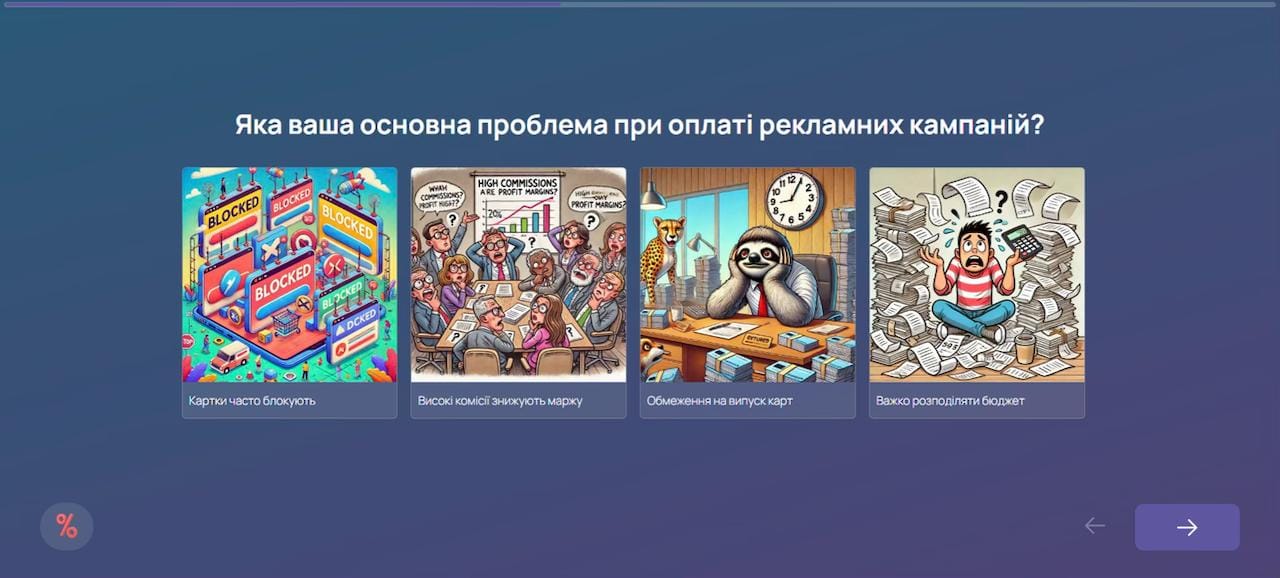
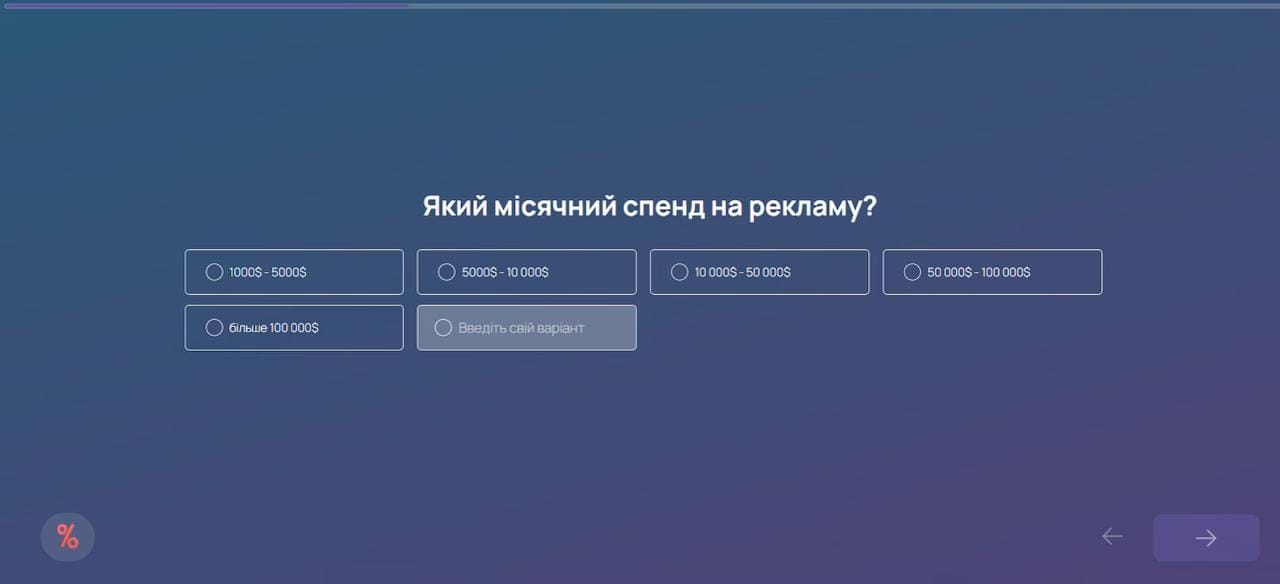
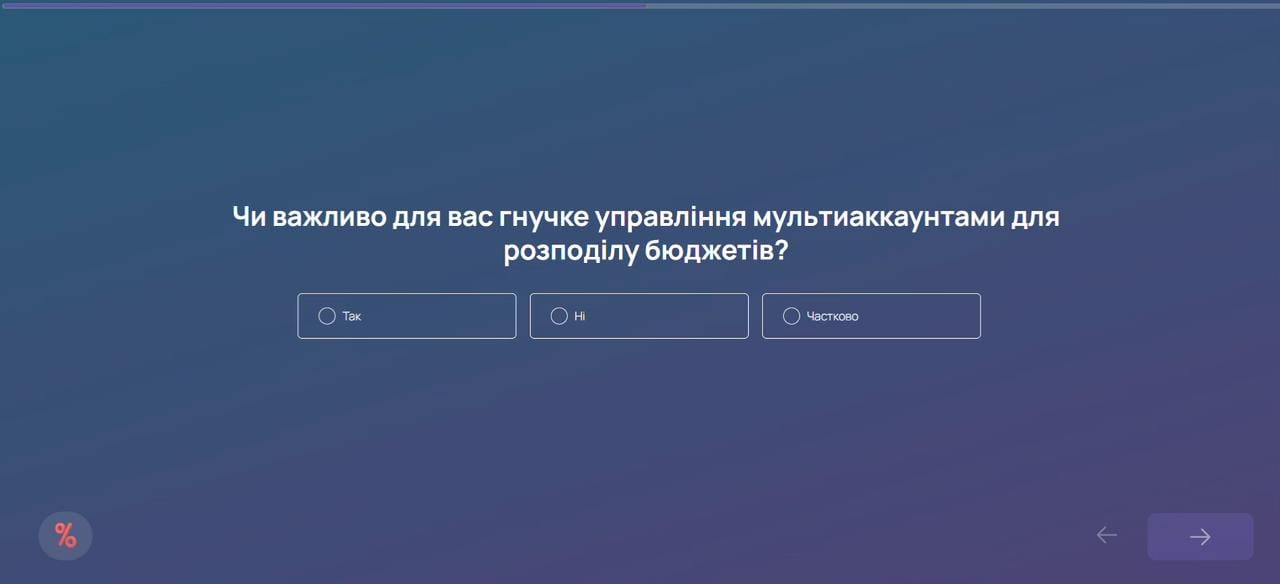
Real questions from the Spendge quiz — one from each group: pain points, situation, benefits.
Audience Segmentation
A segmentation quiz: 2 segments, 2 offers, 6 versions. From day one we decided to target two audience segments. Each segment got its own offer, which meant 2 different versions of the quiz. Because the campaign’s geo targeting was as broad as possible, both versions were translated into three languages. That added up to 6 separate quizzes.
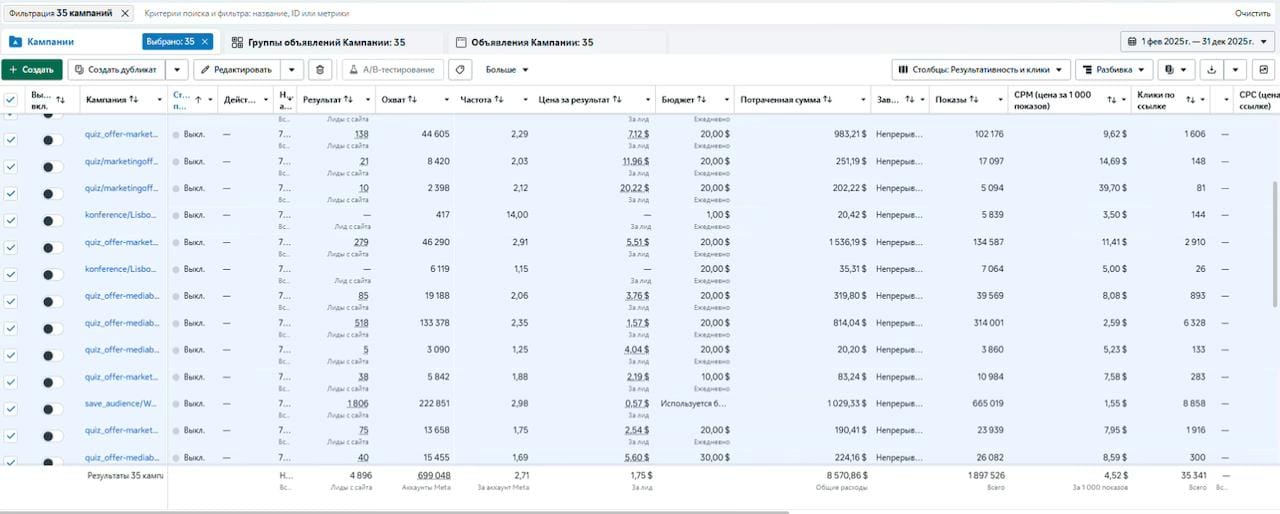
Meta Ads Manager: separate campaigns for each audience segment and quiz language version.
The Post-Quiz Funnel
How to capture quiz leads without losing them to email. After launch we ran into two problems: people didn’t always enter accurate contact details, and email open rates were low. To stop leaking leads at this stage, we added a redirect to a chatbot pre-landing page right after the quiz — and offered the bonuses there.
Taking the quiz
15 questions qualify the lead and immediately sort them into the right audience segment and offer.
Filling out the contact form
At the end of the quiz, the prospect leaves their contact details in exchange for promised bonuses: free cards and discounted fees.
Automatic redirect to the chatbot
As soon as the quiz is completed, the visitor is redirected to the chatbot pre-landing page — so the lead isn’t lost even if they never open the email.
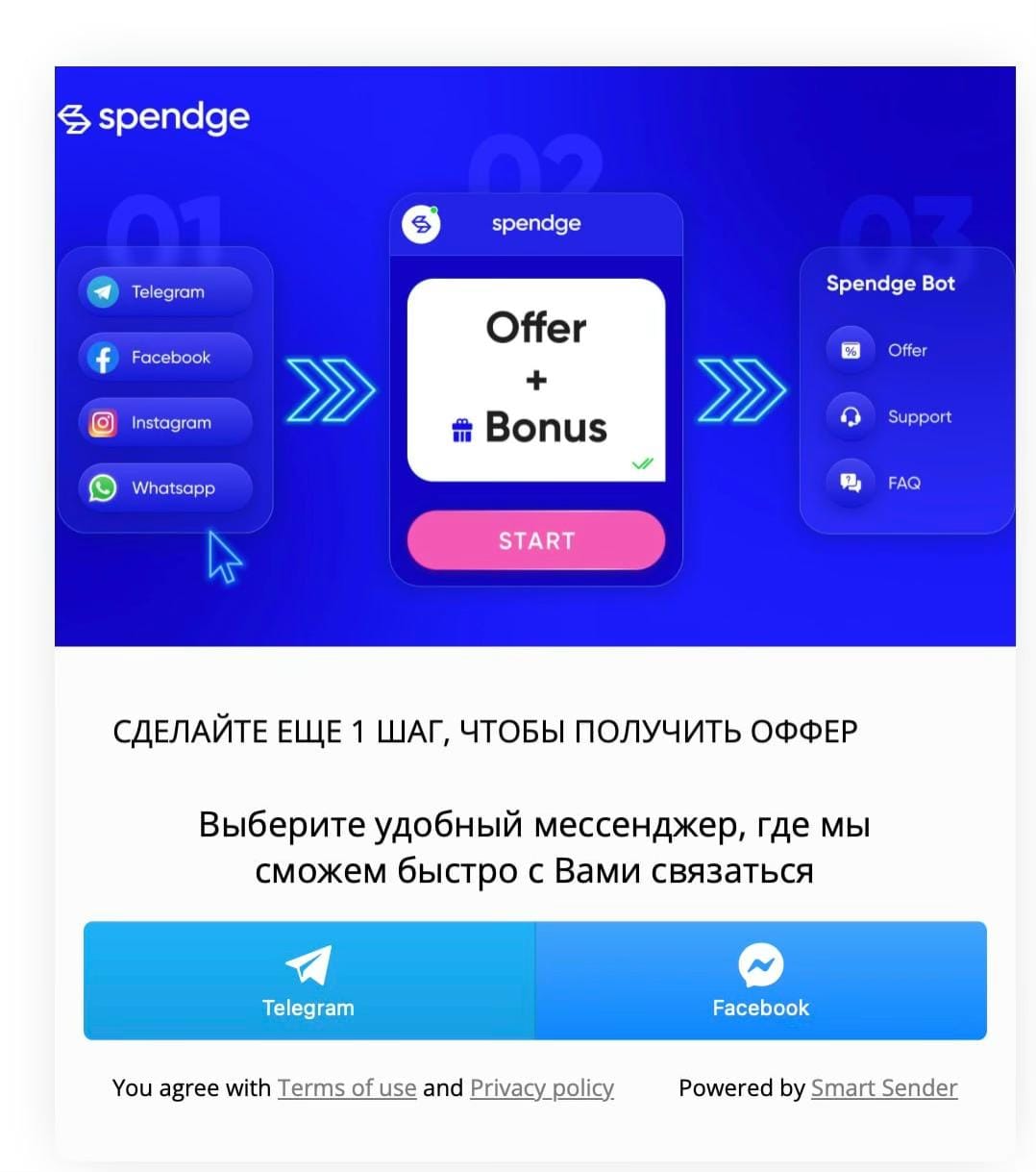
Bonus plus 3 follow-up questions
In the chatbot, the lead gets the bonus and answers 3 more questions that help the support team start the conversation on the right foot.
Sign-up or handoff to support
From there, the funnel leads either straight to signing up for the service or to the support team — if the customer needs extra help.
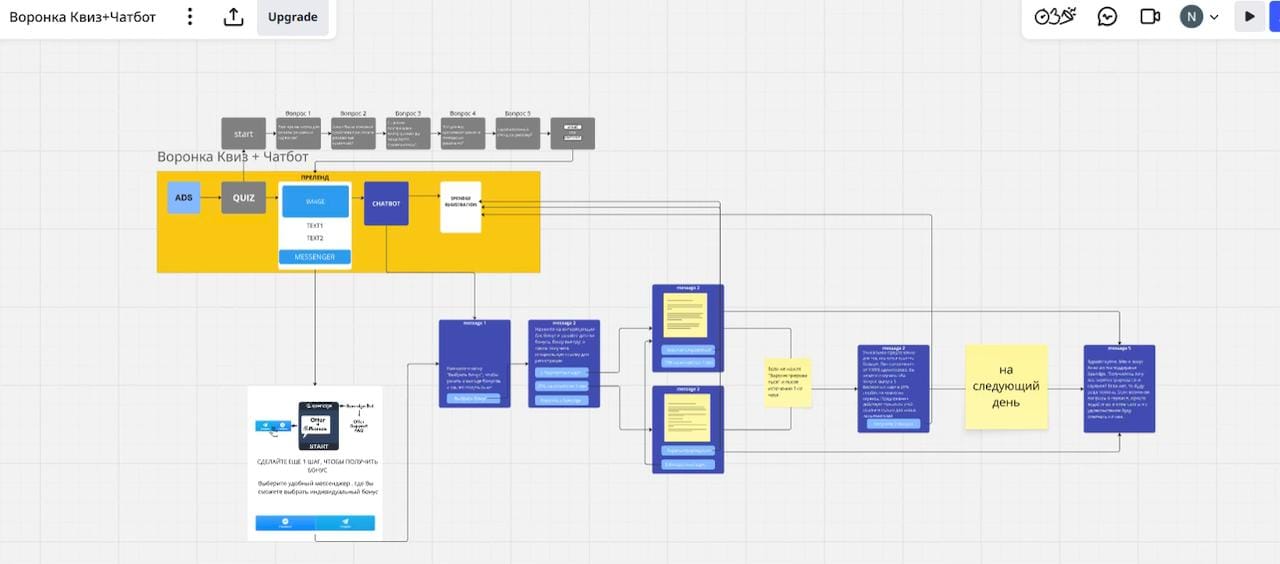
The full funnel map — from the quiz to sign-up or the chatbot — as the Spendge team built it.
What Worked
Quizzes for paid social: what lifted Spendge’s conversion rate. Several decisions from this case carry over to any quiz marketing strategy, whatever the niche. The strategy only works when every question has a clear role instead of being added “just in case.”
Motivate with a bonus
Free cards and discounted fees gave people a reason to finish the quiz and keep going into the chatbot.
Add a backup channel
When email open rates are poor, a chatbot on Telegram or Facebook Messenger is a reliable alternative.
Don’t fear a long quiz
If your goal is tight qualification rather than quick reach, 15 questions can outperform 5.
Localize for your geo
Translating the quiz into your audience’s language is a must when a campaign targets a broad geo.