Lead Generation Quiz Examples: 10 Live Quizzes by Industry
Most lists of lead generation quiz examples show screenshots. This one shows 10 live quizzes you can click through, built on AdsQuiz templates for roofing, solar, kitchens, insurance, law, fitness, e-commerce, B2B services, recruiting and education. For each one you get the questions it asks, the reward it offers, what lands in the lead card and how to adapt it. We also show what real campaigns taught us about quiz length, images and the first question.
What every good lead generation quiz has in common
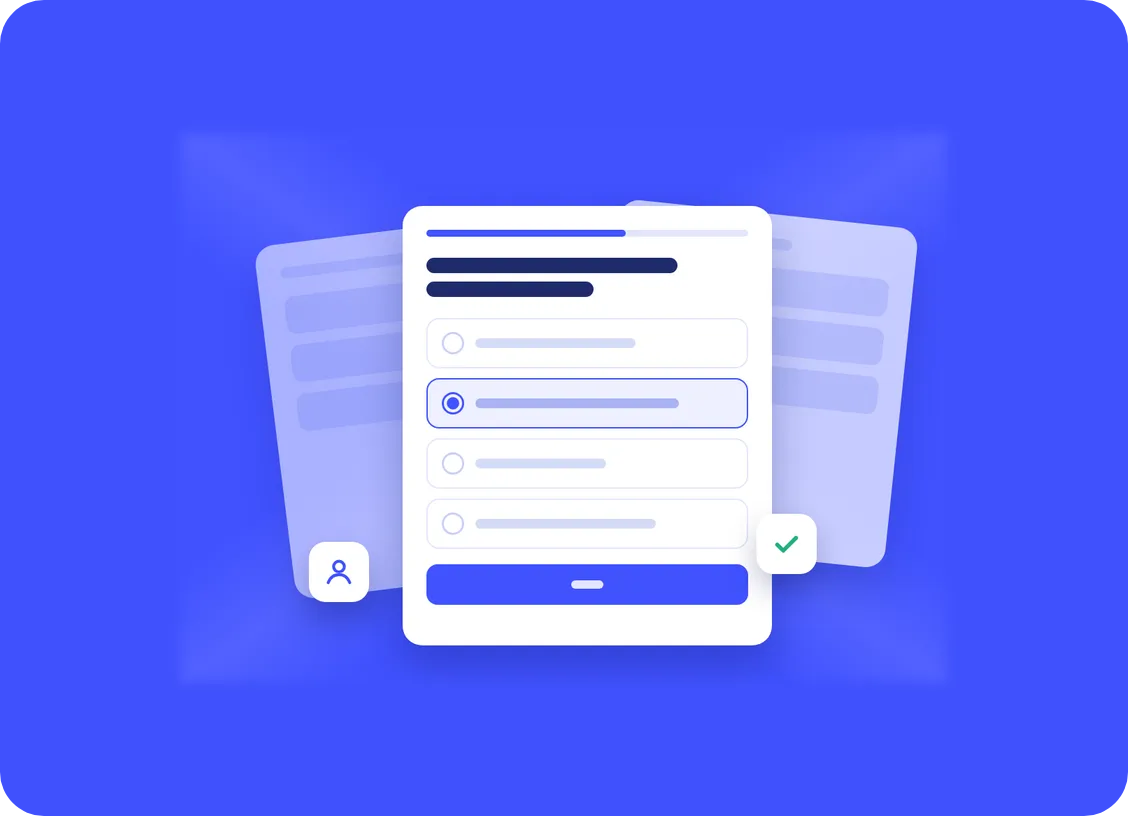
A lead generation quiz is a short series of one-click questions that ends with a contact form and a reward: a quote, a recommendation, a discount or a booked call. The visitor gets something useful, and the business gets a lead with full context instead of a bare email address. All ten examples below share the same skeleton:
- A start screen that repeats the promise of the ad (“get an estimate in 24 hours”), not “take our quiz”.
- Three to eight questions, one per screen, answered with a click, a slider or a date picker.
- At least one qualifying question: budget, timeline, urgency or scope.
- Contact details asked last, after the visitor is invested.
- A clear reward for finishing.
Here is the full list. Each quiz is embedded live further down, so you can see it the way your visitors would.
| # | Example | Industry | What it qualifies | Reward |
|---|---|---|---|---|
| 1 | Roofing estimate quiz | Home services | Property, size, scope, material | An estimate tailored to the project |
| 2 | Solar and renewable energy quiz | Energy | Property, budget, goal | A calculation of what a system would look like for the property |
| 3 | Custom kitchen quiz | Remodeling and furniture | Style, budget, timeline | A kitchen design catalog |
| 4 | Insurance quote quiz with branching | Insurance | Product line, coverage | A personal promo code |
| 5 | Law firm intake quiz | Professional services | Practice area, urgency | A free preliminary consultation |
| 6 | Fitness program quiz | Fitness | Goal, level, restrictions | A free trial workout |
| 7 | Product recommendation quiz | E-commerce | Goal, space, budget | A recommended equipment set |
| 8 | B2B service quiz with two paths | B2B services | Service line, deal size | A free consultation with an expert |
| 9 | Candidate screening quiz | Recruitment | Experience, start date | An interview slot, booked in the quiz |
| 10 | Education consultation quiz | Education | Destination, level, budget | A catalog of top universities |
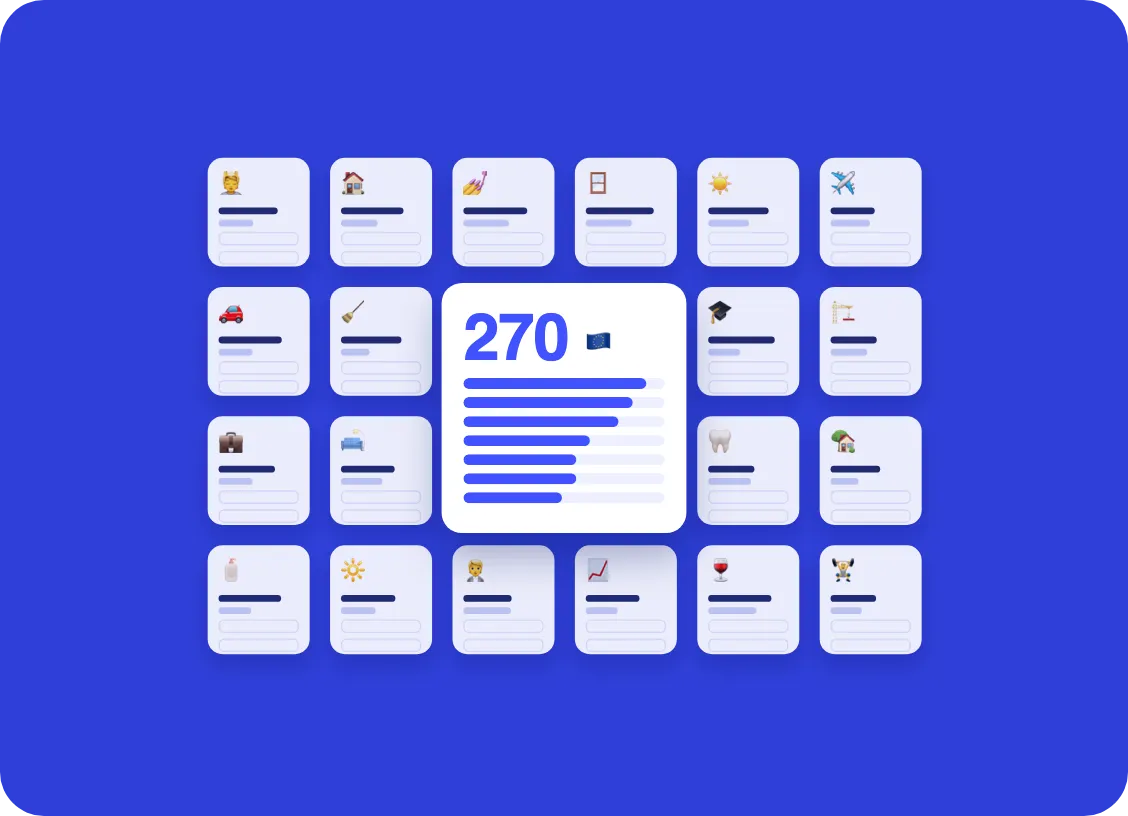
To see how businesses actually use quizzes, from niches to questions and contact forms, read our analysis of 270 European lead generation quizzes.
1. Roofing estimate quiz
Start screen: “Get a consultation and a roofing estimate for your project within 24 hours”
Questions it asks
- Is the building residential or commercial?
- Total roof area (slider)
- Type of work: full replacement, local repair, insulation or waterproofing
- Preferred material: membrane, bitumen, metal, or “need a recommendation”
- City or location
What the business gets: Everything needed to price the job before the first call: property type, size, scope, material and location. The sales rep calls with a ballpark figure instead of a list of questions.
Why it works: Every question maps to a line on the estimate, so the visitor sees why it is asked. Unsure visitors are not lost: “not sure yet” and “need a recommendation” are valid answers.
2. Solar and renewable energy quiz
Start screen: “Clean energy for every home and business”
Questions it asks
- Energy source: solar panels, wind, bioenergy or other
- Type of property: house, apartment, office, farm or plant
- Square footage of the property (slider)
- Budget for the system (slider)
- Goal: lower bills or full energy independence
What the business gets: Leads already split by property type, budget and goal. A homeowner who wants to cut bills and a farm owner who wants independence need different proposals, and the quiz tells you which is which.
Why it works: The budget question is a slider, not a text field: visitors pick a range in one move and nobody has to type a number they are unsure about. The contact step asks for only two fields.
3. Custom kitchen quiz
Start screen: “Creating your dream kitchen with the finest materials”
Questions it asks
- Style: classic, modern, loft, Scandinavian or “not sure yet”
- Kitchen dimensions
- Layout: linear, corner, U-shaped or island
- Budget in USD (slider)
- Built-in appliances: full set, partial or none
- When they plan to order (date picker)
- Delivery and installation needed?
What the business gets: A design brief and a timeline. The date question separates people ordering this month from people planning next year, which decides who gets a call today.
Why it works: It opens with the fun question (style) and leaves the practical ones (budget, timeline) for later, when the visitor is already invested. Seven questions is long, but each one is a single click.
4. Insurance quote quiz with branching
Start screen: “What type of insurance do you need?”
Questions it asks
- What do you want to insure: vehicle, property, health or travel
- Then only the questions for that branch: vehicle type and model year, property type and ownership, travel destination and dates, or age and medical conditions for health
- Coverage limit you are looking for
What the business gets: A lead that is already sorted by product line, with the details an agent needs for a quote. Car leads can go to one agent and travel leads to another.
Why it works: The quiz has 12 questions in total, but each visitor sees only about five of them. This is what branching logic is for: one quiz replaces four separate forms.
5. Law firm intake quiz
Start screen: “What legal service do you need?”
Questions it asks
- Are you an individual or a business?
- Individuals see personal areas (family, inheritance, real estate, immigration, court representation); businesses see corporate areas (contracts, litigation, IP, licensing)
- For criminal cases: what stage the case is at
- How urgently do you need help?
- Do you already have documents?
- Briefly describe the issue
What the business gets: A pre-filled intake form: practice area, urgency, documents and a short description. Urgent cases (“court hearing soon”) can be routed to a lawyer immediately.
Why it works: The urgency question does real work: it tells the firm which leads to call within the hour. The open text question comes last, when people have already committed.
6. Fitness program quiz
Start screen: “Program Finder”
Questions it asks
- Main goal: lose weight, gain muscle, tone up, more energy, get back in shape
- Current fitness level
- How many workouts a week are realistic
- Gym or home
- Any medical restrictions?
- What usually stops you from training regularly
What the business gets: A coach knows the goal, level, schedule and main obstacle before the trial session, so the first conversation is about a plan, not a questionnaire.
Why it works: It screens responsibly: people who report serious medical restrictions see a “consult your doctor first” screen. The “what stops you” question gives the sales team the exact objection to answer.
7. Product recommendation quiz
Start screen: “Build your home gym”
Questions it asks
- Goal: lose weight, gain strength or tone and flexibility
- How much space is available
- Equipment already at home
- Budget (slider)
- Training days per week
- A few numbers for the workout plan
What the business gets: A shopper matched to one of three product bundles, plus their budget and the equipment they already own, so nobody gets offered dumbbells they already have.
Why it works: This is the classic e-commerce pattern: the result page is the product recommendation. It works for any store with a confusing choice, from skincare to coffee machines.
8. B2B service quiz with two paths
Start screen: “Are you looking for staff or team training?”
Questions it asks
- What do you need right now: recruitment, team training, or both
- Recruitment path: what level of role (executive, middle manager, mass hiring) and how many vacancies
- Training path: format (staff training, manager development, strategy session, coaching) and topic (sales, negotiations, project or HR management)
- Number of employees in the company (slider)
What the business gets: A B2B lead sorted by service line and deal size before anyone picks up the phone. A request for one middle manager and a request for mass hiring in a 200-person company go to different people with different urgency.
Why it works: One quiz sells two services without making either path longer: branching sends each visitor down only their own questions. Company size, asked last, is the quiet qualifier that tells sales how big the deal could be.
9. Candidate screening quiz
Start screen: “Find your position on our team”
Questions it asks
- Age
- Any work experience?
- Years of experience (slider)
- Experience in retail or sales?
- Experience managing people?
- When can you start?
- Pick a time for an online interview
What the business gets: Applicants pre-sorted by experience, management background and start date, with the first interview already scheduled.
Why it works: Candidates who do not meet the basic requirements see a polite thank-you screen and stop there, so recruiters only review people who fit. A quiz is also far easier to finish on a phone than a CV upload form.
10. Education consultation quiz
Start screen: “Study Abroad”
Questions it asks
- Country they want to study in
- Level: secondary, bachelor’s, master’s or courses
- Preferred major
- Budget for studying (slider)
- Do they need visa help?
- When they plan to start (date picker)
- Extra services: exam prep, accommodation, insurance
What the business gets: A consultant gets the destination, level, budget and start date, and can see upsell potential (visa help, accommodation) before the call.
Why it works: The extra services question turns a single-service lead into a package. Education buyers research for weeks, so the catalog keeps the brand in front of them after the quiz.
Five techniques the best examples share
| Technique | What it does | Where you saw it |
|---|---|---|
| Branching logic | Each visitor sees only the questions that apply to them, so a long quiz feels short | Insurance, law firm, B2B services, fitness |
| Polite screen-out | People who are not a fit see a helpful message instead of a dead end, and sales never calls them | Fitness (see a doctor first), hiring (thank-you screen for candidates who do not fit) |
| Sliders for numbers | Budget, area and experience are picked in one move instead of typed | Roofing, solar, kitchens, home gym |
| Date or calendar step | Shows how soon the lead will buy, or books the call right inside the quiz | Kitchens, hiring, education |
| A result that is the offer | The result page itself is the recommendation or estimate the visitor came for | Home gym (equipment sets), roofing (estimate) |
Notice what is missing: none of the ten opens with “Enter your email”. The contact step always comes after the visitor has answered a few easy questions and can see the reward coming.
What real quiz campaigns show
Templates show the structure. Campaigns show what happens when real ad traffic hits it. These numbers come from case studies published by the marketers who ran them on AdsQuiz.
Renovation: 7 questions beat 3 and 5
Performance marketer Artem ran Facebook and Instagram ads for a renovation company with no website and projects starting at $20k. He tested quizzes with 3, 5 and 7 questions. Seven questions gave the best lead quality, because the longer quiz qualified budget and scope before the sales call and unserious prospects dropped off on their own. Two more lessons from the same campaign: a text-only quiz converted poorly, and adding images to every question improved it noticeably; and people only started finishing the quiz once the start screen promised a concrete reward, a personalised cost estimate. The result was 200+ leads at $18 per qualified lead. Read the renovation case
Education: 3–4 questions halved the cost of a lead
For an academic consulting business, the agency AG.Marketing compared a website form, Messenger and native lead forms with a quiz of just 3–4 questions that sorted people by the service they needed. The quiz brought the cost of a lead to half that of the website and delivered 22 qualified leads in the first 10 days. Read the education case
B2B: a 4-question quiz found a distribution partner
An agri-business selling feed additives in shipments from 22 tonnes wanted buyers in a new European market, before its website was ready. Marketer Oksana built a four-question quiz (business type, products, volume, delivery method) and ran Facebook ads straight to it. It brought about 100 leads at $8–10 per qualified lead and one signed distribution partner. Read the B2B case
Match the first question to the ad
When we reviewed 92 Facebook and Instagram ads from 20 businesses in the US, UK, Ireland and Australia that send traffic to quizzes built with AdsQuiz, almost none of them said “take our quiz”. They promised an estimate, a recommendation or an answer to “will I qualify?”, and the quiz was how the visitor claimed it. That is why the start screens above repeat a promise rather than describe a quiz. See the quiz ads research
More real cases from AdsQuiz users
Each of these campaigns used a quiz instead of a standard form. The numbers come from the published case studies.
B2B services: $20 per lead without a website
A B2B service company in an unstable market ran Meta ads straight to a quiz instead of a multi-page website. Average cost per lead: $20; customer acquisition cost stayed around $400 against a $500 ceiling, with a payback of about 2 months. Read the case
Local services: conversion from 25% to 49%
Marketer Vitalii Dezhurko replaced a lead form with a quiz, kept leads in Google Sheets and sent real purchases back to Meta through the Conversions API, so the algorithm learned to find buyers instead of form fillers. Lead conversion grew from 25% to 49%, without a paid CRM or a developer. Read the case
Fintech: 6,500+ leads from a 15-question quiz
Spendge, which issues virtual cards for paying for ads, replaced direct-to-sign-up ads with a deliberately long quiz of 15 questions in six versions to screen out the wrong visitors. The result: 6,500+ qualified leads and 2,500+ chatbot subscribers instead of cheap random sign-ups. Read the case
The same lead as a form and as a quiz
Take the roofing company from example 1. Here is what lands in its inbox from a standard contact form and from the quiz.
| Contact form | Roofing quiz | |
|---|---|---|
| What the visitor fills in | Name, phone, “Message” | Five clicks and a slider, then name, phone, email |
| What sales receives | “Hi, need a quote for my roof” | Residential, about 150 m², full replacement, metal, city |
| First call | Ten minutes of questions before any price | Starts with a ballpark estimate |
| Who drops off | Mostly serious buyers who did not want to write a message | Mostly people who were not going to buy |
How to turn one of these examples into your quiz
Every example above is a ready template. You do not need a developer:
Pick the closest example
Open its template, or browse all templates by industry. Change the start screen so it repeats the promise of your ad.
Edit the questions and the reward
Keep the qualifying questions, swap the answers for your own, add picture options and set up branching logic where different visitors need different questions.
Connect where leads go
Leads land in the built-in CRM and can go to Google Sheets, Pipedrive, Kommo, Zapier, Make or a webhook, with email or Telegram alerts. Track results with Facebook Pixel and Conversions API, Google Analytics, TikTok Pixel or ChatGPT Pixel.
Then publish the quiz on its own link for ads, embed it on your website as a block, pop-up or chat button, or put it on your own domain. If most of your leads come from paid social, see how a quiz for Facebook ads fits into a campaign, or read more about the lead generation quiz approach. For the exact wording of questions in 10 more industries, see our guide to lead generation form questions.
Lead generation quiz examples: common questions

Oleksandr Palii, co-founder of AdsQuiz. He works with the marketers and agencies who build lead generation quizzes on AdsQuiz every day, from template design to ad funnels and CRM integrations.
Follow Oleksandr on LinkedInStart from an example that already works
Pick one of the ten templates, change the questions to your business and connect your CRM. You get 100 free leads in your first month.